
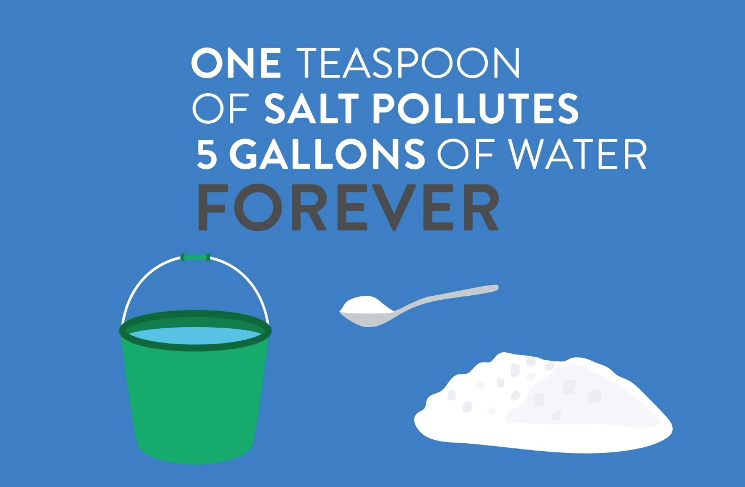
There are 68 lakes and streams in Minnesota impaired by too much salt (chloride) and at least 108 at high risk of becoming impaired in the near future. Salt is toxic to fish, aquatic bugs, mussels, and amphibians and can also mobilize other toxic elements in the water, including radon, mercury, and lead. In addition, evidence suggests that lakes with chloride impairments may experience more frequent blue-green algae blooms. Worst of all, there is no way to remove salt from our lakes, rivers and streams once it is there.

Researchers at the University of Minnesota estimate that 350,000 tons of salt are applied to roads, parking lots, and sidewalks in the Twin Cities metro area each year. Of this total, 34% is applied by cities, 21% by counties, 24% by Minnesota DOT, and 21% by private property owners.
To date, the majority of salt-reduction efforts in Minnesota have focused on training plow drivers and contractors to use “SMART Salting” strategies to reduce their salt use while maintaining public safety. Thanks to certification training, local cities are saving tens of thousands of dollars per year and reducing their annual salt use by several hundred tons.

When it comes commercial properties, however, many property managers mistakenly assume they need a thick, visible layer of salt to keep parking lots and sidewalks safe. In reality, a light dusting of salt is enough to melt ice during warmer temps (above 15°F). Anything remaining after the ice melts is purely wasted and contributes to water pollution. Furthermore, salt actually does not work when pavement temps are below 15°F, so it’s best to use alternative strategies when it’s very cold.

One way that homeowners, businesses, HOAs, and community organizations can help to reduce water pollution from winter salt is by using chicken grit as a no-salt alternative. Chicken grit is made from chipped granite or quartz and is usually fed to chickens and other poultry to aid in digestion. It does not melt ice but provides traction to prevent slips and falls. It is also easier to sweep up and reuse than sand or kitty litter, making it an ideal material for use on sidewalks and driveways.
This winter, South Washington, Ramsey-Washington Metro, Rice Creek, Coon Creek, and Vadnais Lakes Area watersheds will be giving away free bags of chicken grit to community residents in the north and east metro. Pick-up locations include:
- Woodbury Public Works (2300 Tower Dr.) and Cottage Grove Public Works (8635 W Point Douglas Rd S) – 24hr outdoor pick-up
- Washington County Environmental Center (4039 Cottage Grove Dr.) – weekend pick-up
- St. Paul Park Streets Department (649 5th St) – week day pick-up
- Participating hardware stores – visit rwmwd.org/get-gritty to find locations in Andover, Arden Hills, Blaine, Circle Pines, Little Canada, Mahtomedi, White Bear Lake, Woodbury, or St. Paul.
In other locations, you can purchase chicken grit for about $10 a bag at your local hardware or farm supply store.
Here are some additional ways to protect lakes and rivers from salt pollution:
Help us track excessive salt use: Every winter, we field dozens of calls and emails from residents worried about salt pollution. We’ve now created an online form where you can report specific locations so that we can follow-up and mail these businesses and organizations information about winter salting best practices: tinyurl.com/toomuchsalt2026.
Request a salt watch test kit from Izaak Walton League to measure the salinity of a stream or wetland near your home: www.iwla.org/water/stream-monitoring/salt-watch
If you hire a winter maintenance contractor, encourage them to get SMART Salt certified through the Minnesota Pollution Control Agency: www.pca.state.mn.us/business-with-us/smart-salting-training. The next certification training for Property Managers will be held on Dec. 10 (9am-1:30pm) online. Register here.


